Before the Key Card: How Road-Trippers Should Read a Hotel's Parking Setup
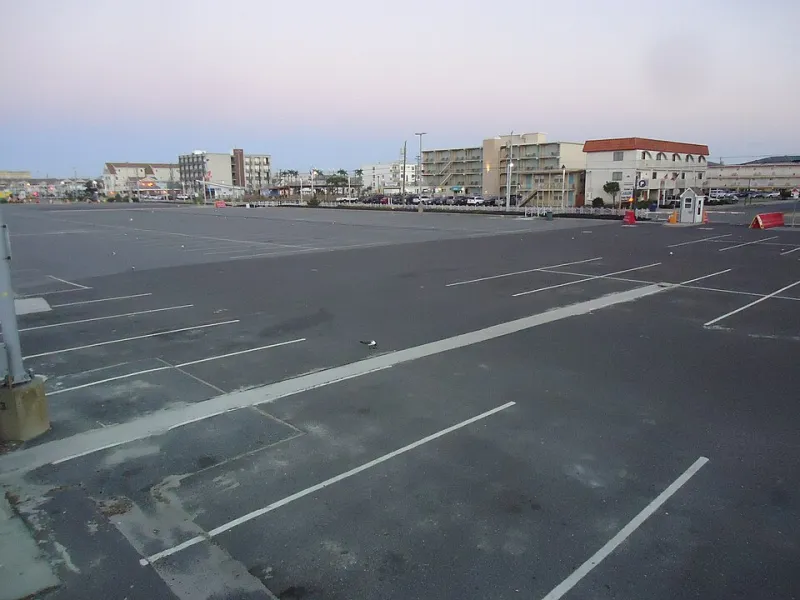
Photo: Tomwsulcer, CC0, via Wikimedia Commons
On a road trip, the first thing that greets you at a hotel usually is not a front desk agent or a crisp lobby scent. It is a driveway. Maybe it is a wide surface lot with fresh stripes. Maybe it is a dim garage ramp with a clearance bar that looks personal. Either way, that patch of pavement sets the tone for the stay — and it can quietly change what you are actually paying.
At Sago Hotel, we tend to judge a property in two stages: the parking first, the pillow second. That is not cynicism. It is practicality. After six hours on the interstate, a confusing garage or a surprise parking fee can make a perfectly good room feel like a bad deal. A little pre-book reconnaissance fixes most of that.
Start With the Driveway, Not the Mattress
Before you compare room photos, pull up the hotel on a satellite map. Look at how cars actually enter and exit. Is there a clear drop-off zone? Does the lot connect to the lobby, or does it send you around the block? In dense city centers, a garage entrance can be on a one-way street that is easy to miss after dark. In suburban properties, the lot may be generous but poorly lit near the back fence.
Recent guest photos are gold here. Search for images of the parking area, not just the pool. Reviewers often mention tight spaces, gate codes, or a ramp that scrapes low bumpers. If several people mention the same issue, believe them. One complaint is a mood. Three complaints are a design flaw.
Surface Lot, Garage, or Something in Between
A surface lot is usually the easy choice for road-trippers. You can see your vehicle, unload near the door, and skip a ramp. The trade-off is weather and security. In summer, the car turns into an oven. In winter, you may be scraping ice at 6 a.m. Look for lots with clearly marked lighting and a lobby-facing entrance rather than a dark rear corner.
Garages are better for shade and security, but they come with geometry. Check the clearance height before you book if you drive a truck, van, or SUV with a roof box. Six feet and eight inches sounds generous until you add a cargo carrier. Also look for in-and-out privileges. Some garages charge every time you leave, which is fine for a convention stay and miserable for a road trip with dinner plans.
The Fee That Changes the Math
A $189 room with $40 parking is a $229 room. That is the simplest way to read it. Parking fees vary wildly in the U.S., from free suburban lots to downtown garages that cost more than a nice dinner. Before you book, find the parking line in the hotel's fee section and read the fine print: per night or per exit, self-park or valet, taxable or not.
Do not forget the destination fee trap. Some properties bundle parking into a resort or amenity fee, which can make the charge feel less optional than it is. If the listing is vague, call the front desk and ask two questions: What is the total parking cost per night, and does it include in-and-out access? A two-minute call beats a checkout surprise.
Valet: Convenience With a Catch
Valet can be a gift when the garage is tight or the neighborhood has no street parking. It can also slow you down. Ask about hours. If the valet desk closes at 10 p.m. and you are arriving at 11:30, you may end up in self-park anyway. Ask where the car goes. At some urban hotels, the valet uses an off-site garage, which means a longer wait when you want to leave.
Another quirk: valet-only properties sometimes allow short-term loading in the drive. Use that window to unload luggage first, then hand over the keys. Do not try to carry everything from a fourth-floor garage with a suitcase that has a mind of its own.
EV Charging and Oversize Rigs
EV charging is improving at U.S. hotels, but it is still inconsistent. A listing that says EV charger may mean two spots shared by the whole property, a Tesla destination charger, or a standard Level 2 plug. Check the charger type and whether it is reserved for guests. If you need a full charge overnight, call ahead and confirm the spot is working. A broken charger is a special kind of road-trip disappointment.
Oversize vehicles deserve their own scouting mission. Full-size pickups, camper vans, and SUVs with trailers can run into length limits, low clearance, or narrow turns. Some hotels have designated trailer parking; many do not. If you are towing anything, ask for the exact dimensions of the largest available space. Do not assume the surface lot is fair game just because it looks big on the map.
Arriving After Dark Without the Stress
Late arrivals are when parking mistakes get expensive. Call the hotel earlier in the day and ask where to park if the main lot is full. Ask whether the front desk is staffed overnight and whether the garage gate requires a room key. If you are solo, request a space near the entrance or under a light. That is a reasonable ask, not a diva move.
When you pull in, use the loading zone first. Unload the essentials, check in, then move the car. This prevents the classic scene where one traveler guards a pile of bags in a dark lot while the other circles the block. Keep valuables out of sight, and take the laptop in even if you are only stopping for a night. A locked car is not a vault.
A Five-Minute Pre-Book Parking Checklist
Before you tap reserve, run this quick list: confirm the parking fee per night, check for in-and-out privileges, verify clearance if you have a roof rack, look for EV charger type and availability, ask about oversize or trailer space, and read the three most recent parking mentions in reviews. Then picture your arrival. If the setup feels annoying on paper, it will feel worse at 11 p.m. with a cold coffee and a full bladder.
The lobby can be lovely. The mattress can be perfect. But on a road trip, the parking lot is the first room you enter. Read it before you book, and the rest of the stay gets a lot easier.