After-Hours Arrival: How to Keep Your Room From Sliding Down the List
Photo: Unknown Photorapher, Public domain, via Wikimedia Commons
Late check-in is not a moral failing. Flights slip, traffic backs up, and the rental car counter moves at the speed of a DMV. But on a busy arrival day, the clock does affect what is left when you reach the desk. The 8 p.m. arrival is not cursed. It is simply later in the sorting process.
Here is how room assignments work, why late guests often get the leftovers, and how to protect your preference without turning into the person who holds up the line.
How Rooms Actually Get Assigned
Hotel rooms are not assigned in one neat batch at noon. The front desk works from a forecast of arrivals, departures, room types, and special requests. Housekeeping releases rooms through the afternoon. Maintenance may pull a room for a repair. A guest may extend a stay. A wedding block may need to be kept together. By evening, the inventory has been sorted many times.
Staff usually assign rooms in waves: loyalty elites and guests with confirmed preferences first, then early arrivals, then the remaining reservations. The best-located rooms go to the people who ask early, pay for the category, or hold status. If you arrive after 8 p.m. on a sold-out night, you are often choosing from what is left, not from the full menu.
The Rooms Most Likely to Be Left
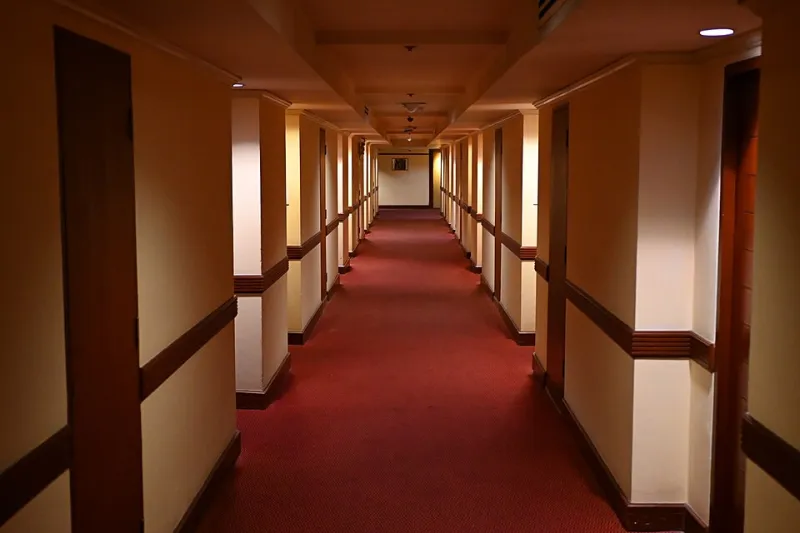
The leftovers are not always bad. Sometimes they are spacious rooms on a low floor. But the common leftovers are the ones that did not sell: rooms near the elevator, ice machine, or vending area; rooms with a connecting door and thinner sound insulation; rooms facing a busy street; and rooms on lower floors where you hear the delivery truck at 6 a.m. A late arrival is also more likely to get a smaller room when the hotel has been upgrading other guests all day.
This is not a conspiracy. It is arithmetic. The front desk is trying to fit everyone in, and the easiest rooms to give away are the ones with a catch.
Before You Travel: The Polite Pre-Arrival Playbook
Start with the reservation itself. Book the room type you want, not the cheapest room with a hope and a prayer. If quiet matters, say so at booking: a high floor, away from the elevator, ice machine, and street. Ask the agent to add the note to your file. Then call the hotel directly 24 to 48 hours before arrival, ideally in the afternoon. Keep it short: 'I am arriving around 9 p.m. on Friday. I know you cannot promise a room number, but if there is a quieter room available, I would appreciate the note.'
That call does two things. It confirms your arrival time and it puts a human voice with the reservation. Ask whether the hotel has mobile check-in and whether you can select your room in the app. In 2026, more properties let you check in, choose a room, and use a digital key before you arrive. That can be a real advantage. It can also be a trap if you tap through without looking at the room location.
At the Desk: What to Say After 8 P.M.
Be specific, friendly, and flexible. 'I know it is late. If there is a room away from the elevator or a higher floor, I would rather take that than a larger room by the ice machine.' That sentence gives the agent a clear problem to solve. It also signals that you are not asking for a free upgrade, just a better night of sleep.
If the only room left is a noisy one, ask what the options are. Can they move you tomorrow morning? Is there a room on a quieter side that opens up after a departure? Would earplugs or a white-noise machine help? A good front desk will work with you. A tired one may not, but asking calmly is still your best move.
Do not demand a specific room number. Do not recite your loyalty status as a threat. Do not hold up a long line with a full history of your flight delay. The agent has more power to help the guest who makes the request easy to grant.
Mobile Check-In in 2026: Helpful, Not Magic
Mobile check-in is the biggest change in late-arrival strategy. It lets you bypass the desk at some properties, but it also means the room may be assigned earlier, while more inventory is still open. Use the app to check in as soon as it opens, review the room number and floor, and switch rooms if the app allows it. If the app assigns you a room next to the elevator, change it before you tap the digital key.
Not every hotel offers room selection, and not every brand handles it the same way. Ask at booking. If the app only lets you check in without choosing a room, call the hotel and ask them to note your preference. The app is a tool, not a guarantee.
A Realistic Backup Plan
Pack earplugs and a small white-noise machine if you are sensitive to sound. Book the room category you actually want. If you know you will arrive late, tell the hotel at booking and again the day before. Consider a morning flight or an earlier train when the schedule allows. And if the room is truly bad, ask for a move the next morning rather than fuming all night. Hotels usually have more flexibility after checkout than at 10 p.m.
The 8 p.m. check-in trap is real, but it is not unavoidable. A little preparation, a polite call, and a clear preference can keep you out of the room by the ice machine. That is not just good manners. It is good travel.