Read the Carpet, Not the Lobby: A 90-Second Hotel Hallway Audit
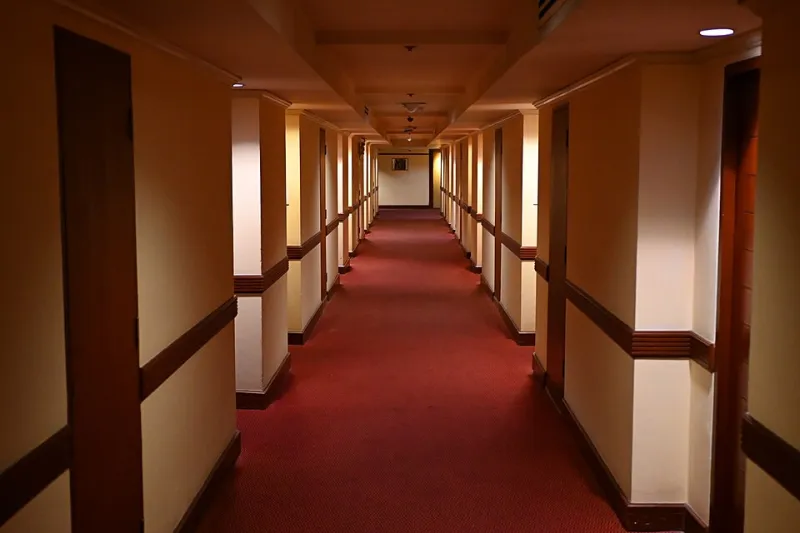
Photo: PattayaPatrol, CC BY-SA 4.0, via Wikimedia Commons
Lobbies are designed to impress you. Hallways are not. That is why I trust them more. The lobby has a budget, a lighting designer, and someone whose job is to make the first ten seconds feel like a welcome. The hallway has carpet, doors, and the truth. If you want to know how a hotel is actually run, skip the check-in small talk and take a 90-second walk to your room.
At Sago Hotel, we think the corridor is the most honest review you will ever get. It tells you about maintenance, housekeeping, soundproofing, and safety before you have unpacked a single bag. You do not need a checklist app. You need your eyes, your nose, and about a minute and a half.
The 90-Second Audit
Start at the elevator or stairwell, before you walk to your room. Stand still for fifteen seconds and look down the hall. Notice the light. Is it warm and even, or is it a fluorescent glare with one dead bulb at the far end? Look at the ceiling for water stains and at the walls for scuff marks. Check the exit signs. A hallway that feels dim in the middle of the day will feel worse at midnight.
Then walk slowly. This is the part people rush. You are not marching to your room; you are reading the floor. Look at the carpet. Is it vacuumed, or is there a dark path worn down the middle? Are the seams flat, or are they buckling? A carpet that has given up is a maintenance bill that has been deferred. Look at the baseboards, the door frames, and the paint. Small damage is normal. A pattern of neglect is not.
While you walk, count the doors. Are they spaced comfortably apart, or are they packed tight? A room that shares a wall with the ice machine, the vending area, the elevator, or a housekeeping closet is a room that will wake you up. If your room is at the end of the hall, that can be a gift: fewer neighbors. If it is next to the stairwell, that can be a curse: every fire door and every late-night conversation.
Now use your nose. The hallway should smell like clean air, maybe a little laundry soap. It should not smell like mildew, stale smoke, or a candle trying to cover either one. A strong fragrance in a corridor is a red flag, not a luxury. It usually means someone is hiding something.
In the last thirty seconds, listen. Can you hear the elevator ding from your door? Can you hear a TV through the wall? Is there a hum from the ice machine or a rattle from the HVAC? Open and close your room door once. Does it seal, or does it rattle? Look at the gap under the door. A wide gap lets in light and sound. A damaged frame is a security question, not just a cosmetic one.
What Raises a Flag
A single scuff mark is not a reason to change rooms. A blackened carpet path, a musty smell, a flickering light, or a room next to the ice machine is. So is a corridor that feels unsafe: broken locks, propped fire doors, or exits blocked by housekeeping carts. You are not being picky. You are paying for a room, and the hallway is part of the room.
The most common red flags are boring and fixable: a room near the elevator, a room near the ice machine, a room with a connecting door that lets in noise, or a hallway that smells like last night's smoke. The less common ones are serious: water damage, mold, or a door that does not latch. If you see those, do not wait.
When and How to Ask for a Different Room
Ask before you unpack. That is the whole trick. Once your suitcase is open and your toothbrush is on the sink, moving feels like a chore. Before that, it is just a walk back to the desk.
Be specific. 'The room is noisy' is easy to dismiss. 'I am next to the ice machine and I can hear the elevator from the door' is not. Try this: 'Hi, I just walked to my room and noticed the ice machine is right next door. I have not unpacked yet. Is there another room available away from the elevator and the ice machine?' That gives the front desk something to solve.
If the issue is smell or mold, say so plainly. 'The hallway smells musty and the room has a damp spot near the window' is a maintenance issue, not a preference. Ask for a different room or a different floor. If the hotel is full, ask for a maintenance visit and an air purifier. If the problem is safety, such as a door that does not lock, ask to move immediately.
Be polite, but do not apologize for asking. Front desks deal with room changes all day. A calm, specific request is easier to help with than a vague complaint. And if you get a new room, do the 90-second walk again. You already know the drill.
The hallway is not glamorous. That is the point. It is the part of the hotel that has no spokesperson. Learn to read it, and you will book better, sleep better, and check out with fewer stories about the ice machine.